

“Order, Order!”, something that strikes the most of our minds, the moment we hear anything related to the judicial system! Does that happen to you, too? Surprisingly, these are not only terms that are commonly said in courts, but also they reflect upon something extremely important in the legal system- Order. The order of things to be precise is key to anything and everything that has to do with the judicial system, from trials to documentation. Considering the importance of conduct in the legal industry, variation in legal issues across the globe, and the significance of different regulations, the amount of complexity in legal translations is quite high! As a translation company though, we At EZ, pride ourselves on explaining difficult concepts in a simplified manner! So, let us get started!
What is legal translation and why do we need it?
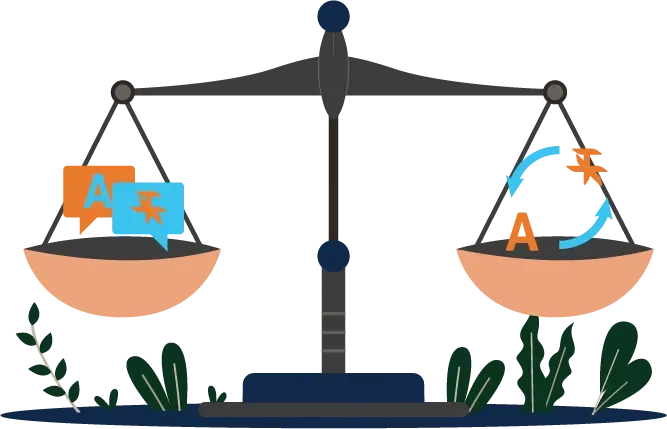
As you might already know, translation is the conversion of a source language into a target language, while keeping the meaning and intent, intact. So, legal translation is, basically, the translation of the language of the legal realm. Yes, law itself is a language! It comprises extensive terminology and specific syntax, that can be understood and translated only by professionals. Wondering why? Here’s the answer:
Any kind of legal document contains immensely sensitive information, for which context and accuracy are vital. Documents like agreements, contracts, statements from witnesses, immigration documents, court orders, trusts, wills, patents, depositions, litigation documents, property labels, and articles of incorporation are some examples of the kind of documents that a legal translator will have to work with! Additionally, the difference in laws not only exists from country to country but also within the country in many nations. With a system so intricate, a layman in law cannot deliver satisfactory translation, even if they are extremely fluent in both the source and the target language of the respective document to be translated!
Give me more reasons behind the complexity of legal translation!
If the complexity of legal translation ended in two paragraphs, we would not have needed an article! So, let us look at some more reasons as to why legal translation is an exhaustive process:
- A person working with the translation of legal documents has to unfailingly contend with the delivery of accurate voice tone, and niche and register terminology. They have to fully understand the meaning of legal jargon in both languages to make the translated document contextual.
- Even slight ambiguity in a translated document can lead to delays, invalidate documents, and ruin relationships.
- Legal translation is much more wordy with complex structures of sentences. So, a person not used to translating such documents, even if they have studied law, will have a lot of difficulties in delivering error-free translated content.
- Experience of multiple years within the legal system is imperative for legal translations. Without a deep understanding of the content to be translated, some inaccuracy is bound to occur.
- It is also necessary to know that for some languages, legal documents are written in active voice while for others it is written in passive. For example, in English, passive and formal voice is used in legal text while most of the other languages use active voice instead.
- In some the countries like Sweden, Spain, and the Netherlands, a legal translator is made to take an oath! Similarly, in many other countries, it is mandatory for a translator to have a degree in legal translation. Legal translators are also made to give a lot of tests to identify their proficiency and practice.
- It is highly difficult, and also advised against translating a legal document by oneself without sufficient knowledge of law. Even with a good amount of knowledge, there are some practices and rules that keep a check on the legal document translation, and your document may not be notarized if you do it yourself. Some mistakes in legal translations have lead to extreme backlash and expensive lawsuits, as well!
What skills does a legal translator need?
Despite the process of legal translation being quite complex, the job of a legal translator is quite intriguing! Don’t you think so? Let us look at some of the skills a legal translator should foster:
- Command over the culture, practices, language, and legal system of both the source and the target language.
- Relevant qualifications in the field of translation in law depending on the country.
- A thorough understanding of the sub-areas of the specific and relevant laws
- Acquaintance with the difference in the kind of law language used in the courtroom and that used in the documents.
- A firm understanding of the technical documents
- Staying updated with the creation of any new laws or amendments in the existing laws
What to look for in a translation company that can help me with legal translation?
You just got familiar with the detail-oriented procedure of legal translation, and this complexity is the primary reason why you need a translation company to take care of your legal translations. However, as we mentioned earlier, a lot of sensitive information is contained in every legal document. So, there are some things that you need to ensure before selecting a translation company! Let us have a look at these factors:

- Quality- Quality in a translated document means consistency throughout the content. The whole document should be proofread multiple times by the company, before submitting the final product to the respective client. For instance, at EZ, we promise Consistently High Quality in every deliverable that we send out!
- Respect for client information- Once again, the information contained in legal documents is highly sensitive and confidential, which is why information breach is not affordable. Only secure systems, like the ISO-Certified ones at EZ, with the promise of maximum Information Security, should be used to process, keep and translate the legal documents.
- Company reputation and experience- Understandably, entrusting a company with legal translation is hard, for which customer testimonials, portfolio, and company reputation help a lot in forging a decision. It is always a good idea to check for these factors while assigning a company your legal translation work.
- Transparency- A company should always be transparent with its client. If you want to know about the qualifications of people working on your legal documents or the rough timeline of deliverables and the reason behind the specific quote from your translation company, then they should be able to oblige without any hesitation.
Sum up my takeaway!
As you would know by now, the elaborate system backing legal translation can only be handled by experts. However, you might not know that translation itself is a very complex process that can only be done best by translators with an understanding of local context and a native level of proficiency in both their respective languages, just like the translators at EZ! So, get in touch with our Round The Clock Available Experts, to avail any service from our Suite Of Business Support Services!