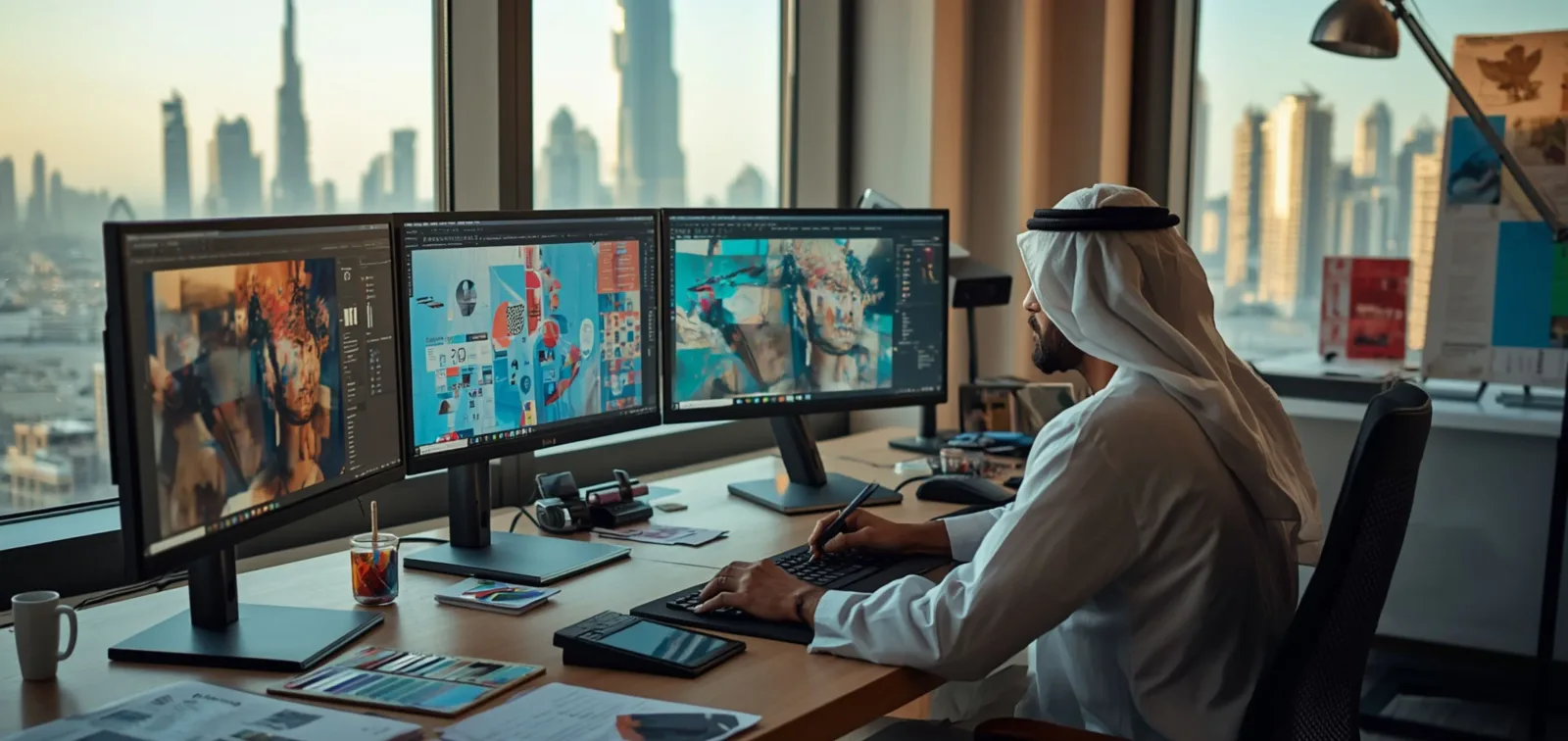
Studies show that up to 75% of a brand's credibility comes from its visual design making it one of the most critical factors in how businesses are perceived.
The UAE has always positioned itself at the intersection of luxury, innovation, and global influence. However, 2026 is shaping up to be a defining moment for visual design in the region. What’s changing is not just how things look but how design behaves, adapts, and communicates in real time. Brands are moving beyond static visuals into systems that respond to user behavior, cultural context, and evolving digital environments, an approach that EZ focuses on while building design systems for real business use.
For companies operating in this market, visual design is no longer a surface-level decision. It directly impacts perception, engagement, and ultimately, business growth. The brands that will stand out are the ones building flexible, future-ready design ecosystems.
Why 2026 Will RedefineVisual Design in the UAE
The biggest shift happening right now is the move from aesthetic-first design to experience-first design. Earlier, success was defined by how visually appealing a brand looked. Now, it is about how seamlessly users interact with it. Every visual element, whether it is a website, app interface, or campaign, needs to guide, respond, and evolve with the user. This makes design less about decoration and more about functionality and engagement.
At the same time, the UAE’s unique environment is accelerating this change. Luxury industries are pushing for highly polished, premium visuals. Technology is introducing AI, automation, and immersive design formats. Government-led innovation, especially around smart cities and digital transformation, is encouraging brands to adopt futuristic and scalable systems. Together, these forces are creating a design landscape that is both fast-moving and highly demanding.
This is why there is a growing demand for future-ready brand systems. Instead of isolated assets like logos or campaigns, brands now need cohesive systems that work across platforms, adapt to different formats, and maintain consistency over time. Design is no longer a one-time effort. It is an ongoing, evolving process.
Visual DesignTrends in UAE 2026
- AI-Generated and Adaptive Design Systems: AI is becoming a core part of design creation, helping brands generate variations, personalize experiences, and optimize visuals in real time.
- Futuristic Minimalism with Regional Identity: Minimalism is evolving by blending clean layouts with subtle Arabic patterns, regional colors, and modern typography.
- Motion-Led Storytelling: Motion is being used to replace static visuals, making communication more engaging and easier to understand.
- Immersive 3D and Spatial Design: 3D visuals are creating more interactive and realistic experiences, especially in industries like real estate and luxury.
- Hyper-Personalization: Design is adapting to individual user preferences, making experiences more relevant and targeted.
- Sustainability-Driven Visuals: Brands are using natural tones and minimal styles to reflect environmentally conscious values.
Color Palettes Dominating UAE Design in 2026
Color in 2026 is a strategic tool for positioning. Brands are using color to signal luxury, innovation, or cultural alignment depending on their audience and industry. Metallic tones like gold and chrome are being widely used to create a sense of exclusivity, while desert-inspired neutrals bring warmth and regional authenticity.
At the same time, there is a strong contrast emerging. On one side, deep jewel tones such as emerald and burgundy are helping premium brands stand out. On the other hand, futuristic neon gradients are being used by tech-driven companies to communicate innovation and digital-forward thinking. This duality reflects the UAE’s identity itself, where tradition and future coexist.
To simplify how brands are approaching color strategies in 2026, here is a quick breakdown:
| Color Style | What It Communicates | Where It Works Best |
|---|---|---|
| Metallics & Reflective | Luxury, exclusivity | High-end brands, real estate |
| Desert Neutrals | Warmth, cultural connection | Hospitality, lifestyle |
| Jewel Tones | Depth, premium identity | Fashion, luxury retail |
| Neon Gradients | Innovation, tech-forward | Startups, digital products |
| Monochrome + Accent | Clarity with impact | Corporate, modern brands |
The Rise of Futuristic Visual Branding in the Emirates
- Meaning of Futuristic in UAE Context: It is not just about sci-fi visuals but about combining technology, precision, and premium execution to create seamless and forward-looking design systems.
- Focus on Intelligent Design Systems: Futuristic branding is built around designs that feel smooth, structured, and adaptable rather than just visually striking.
- Industries Driving Adoption: Luxury, real estate, technology, and the public sector are leading this shift with high expectations for design quality.
- Use of Immersive Visuals: Real estate brands are using 3D visuals to create realistic and engaging property experiences.
- Interactive and Dynamic Interfaces: Tech companies are focusing on interactive designs that respond to user actions and improve engagement.
- Influence of Government Initiatives: Public sector projects are pushing clean, modern, and highly functional designs aligned with smart city goals.
- Key Signals of Future-Ready Brands: Clean layouts, motion integration, strong typography, and interactive elements are becoming standard indicators of modern, forward-thinking brands.
FindingDigital Design Studios OfferingTrend-Based Services
- Trend Awareness vs. Execution: Knowing trends is not enough; the real value lies in how effectively a studio can implement them.
- Focus on Execution Quality: Strong execution ensures that ideas translate into clear, consistent, and impactful design.
- Speed Without Compromising Quality: In the UAE’s fast-moving market, studios must deliver quickly while maintaining high standards.
- Structured Workflows: Efficient processes and coordination help ensure smooth delivery and fewer errors.
- Consistency Across Touchpoints: Designs should remain uniform across platforms, especially for brands operating at scale.
- Proven Capability Over Promises: Look for studios that can show real results and completed work, not just concepts.
- Strong Communication: Clear and regular communication is key to successful collaboration and alignment.
- Adaptability: The ability to adjust quickly based on feedback or changing requirements is a strong advantage.
Designing for the MiddleEastern Aesthetic in 2026
- Balance Between Global and Local: Design needs to combine international appeal with strong cultural relevance.
- Shift Toward Subtle Cultural Elements: Brands are moving away from heavy traditional styles and using more refined, modern interpretations of Arabic identity.
- Minimal Use of Patterns: Patterns are used carefully to enhance design without making it look overly decorative.
- Role of Contemporary Typography: Modern typography helps create a clean and updated visual identity.
- Arabic and English Font Pairing: The combination of both languages needs to be balanced to maintain readability and visual harmony.
- Use of Symbols and Visual Cues: Thoughtful use of cultural symbols adds depth without overwhelming the design.
- Respect for Cultural Context: Designs must align with regional values and audience expectations.
- Need for Regional Expertise: Working with designers who understand the Middle Eastern market helps achieve the right balance between creativity and cultural sensitivity.
Cost of Building a2026-Ready Visual Identity in UAE
The cost of building a future-ready visual identity in the UAE varies widely depending on scope and complexity. High-end projects often include branding systems, motion design, and digital assets, all of which contribute to the overall investment.
What many brands are realizing is that cutting costs upfront often leads to higher expenses later. A poorly designed system requires frequent updates, redesigns, and fixes. On the other hand, investing in a scalable system ensures long-term consistency and reduces the need for repeated work.
There is always a trade-off between cost, speed, and quality. Brands need to decide what matters most based on their goals. In a competitive market like the UAE, prioritizing quality and scalability often delivers better long-term value.
Common Mistakes Brands Make with Design Trends
- Chasing Trends Without Relevance: Adopting popular trends without checking if they align with the brand often leads to a weak and inconsistent identity.
- Overcomplicating Design Systems: Trying to appear innovative can result in designs that are too complex, making them harder to use and understand.
- Ignoring Cultural Context: In markets like the UAE, overlooking cultural sensitivity can negatively impact how a brand is perceived.
- Lack of Clarity in Communication: Designs that are visually heavy or unclear can confuse the audience and reduce effectiveness.
- Inconsistent Visual Identity: Using different styles, colors, or layouts across platforms weakens brand recognition.
- Underestimating Execution Quality: Even strong ideas can fail if they are not implemented properly with attention to detail.
What’s Next: The Future of Visual Design in UAE
The future of design in the UAE lies in collaboration between AI and human creativity. AI will handle efficiency, variation, and data-driven insights, while human designers will focus on strategy, storytelling, and emotional connection.
Another important shift is toward living brand systems. Instead of fixed identities, brands will have flexible systems that evolve continuously based on user behavior and market trends. This will make design more dynamic and responsive than ever before.
Design will also become more closely integrated with data. Decisions will increasingly be based on real-time insights rather than assumptions. This will allow brands to refine their visuals continuously and stay relevant in a rapidly changing environment.
Conclusion
Visual design in the UAE is entering a phase where adaptability, intelligence, and cultural awareness matter more than ever. Brands need to think beyond trends and focus on building systems that can grow and evolve over time.
The key takeaway is simple. Trends guide direction; execution determines success. Without strong execution, even the most innovative ideas lose their impact.
EZ helps brands bridge this gap by combining strategy, design, and execution into one cohesive process. What sets us apart is our ability to deliver faster than the fastest execution with our 10-20-30 thumb rule, ensuring tight timelines are met without delays. Along with this, round-the-clock availability allows us to stay responsive in high-pressure scenarios.
As 2026 approaches, the brands that will stand out are not the ones doing more but the ones designing smarter.